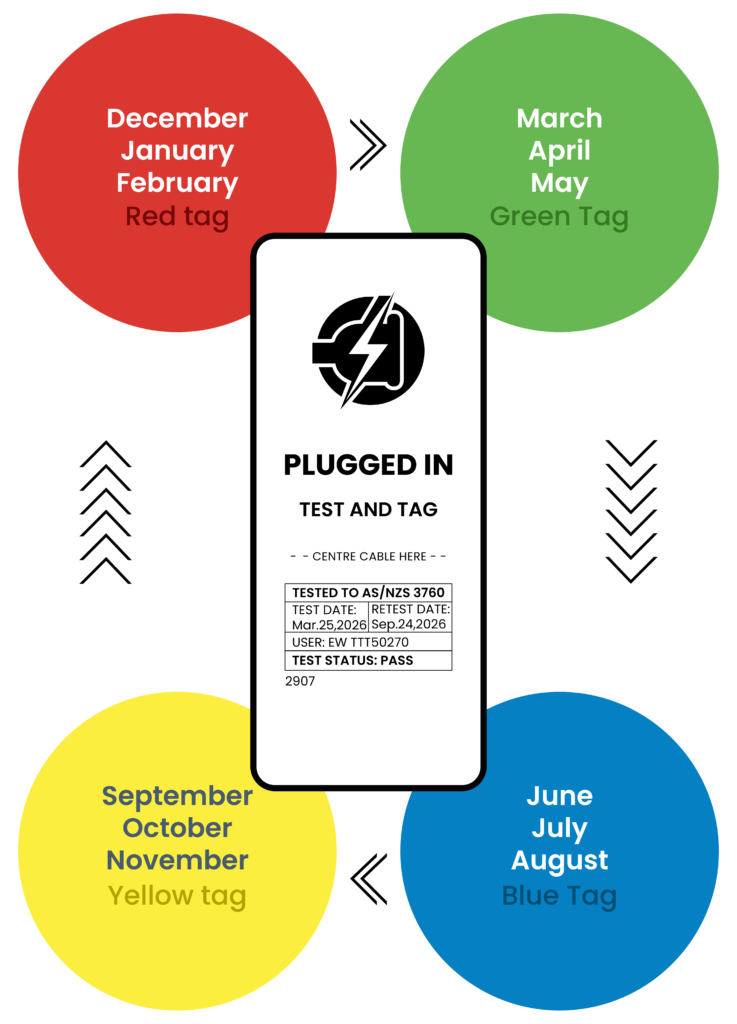
Testing intervals vary depending on environment and risk level.
Testing conducted in accordance with recognised regulations.
AS/NZS 3760 outlines inspection and testing requirements for electrical equipment.
AS/NZS 3012 governs electrical installations on construction and demolition sites.
Testing intervals may also vary based on individual workplace risk assessments
Testing intervals vary depending on the environment, level of risk and type of equipment in use. Regular inspection ensures ongoing compliance with Australian Standards and helps maintain a safe working environment.
| TYPE OF ENVIRONMENT AND/OR EQUIPMENT | TYPE OF ENVIRONMENT AND/OR EQUIPMENT |
|---|---|
|
Manufacturing & Assembly |
|
|
Factories, workshops, places of manufacture, assembly, maintenance or fabrication |
6 Months |
|
Active & Hostile Environments |
|
|
Environments where the supply flexible cord is prone to flexing during normal use OR is subject to misuse OR is in a hostile environment |
12 Months |
|
Equipment used for commercial cleaning |
6 Months |
|
Construction & Demolition Sites (Specific standard AS/NZS 3012) |
3 Months |
|
Passive & Office Environments |
|
|
Environments where the supply flexible cord is NOT subject to flexing during normal use and is NOT in a hostile environment |
5 Years |
|
Residential / Public Accommodation |
|
|
Common areas of hotels, motels, boarding houses, residential institutions, halls, hostels, and similar |
2 Years |
|
Specific Equipment Types |
|
|
Hire Equipment |
Before each hire (plus regular 3-monthly checks) |
|
Repaired or Serviced Equipment |
Must be re-tested after repair before return to service (see AS/NZS 5762) |
|
Second-Hand Equipment |
Must be inspected and tested before sale (see AS/NZS 5761) |
This table is a simplified overview of the formal inspection and test intervals required by the standard. Always refer to the full text of AS/NZS 3760:2022 Table 2.4 for precise details and to determine the correct application based on a site-specific risk assessment.
Determining Test Frequency
The required interval between inspections depends heavily on the environment and the risk of damage to the equipment.
| RCD Type | User Check (Push-Button Test) | Formal Tripping Time Test |
|---|---|---|
|
Portable RCDs |
3 Months (or before each use) |
12 Months |
|
Fixed RCDs |
6 Months |
12 Months |
|
Used in Manufacturing/Hostile Areas |
Refer to site risk assessment |
6 Months |
Residual Current Devices (RCDs) are vital safety devices and require separate testing. Testing is split into a user check (push-button) and a formal operation test.
Risk-Based Approach: The intervals in the table are recommended minimums. A risk assessment of your specific workplace may dictate more frequent testing.
The “Hostile” Definition: A hostile environment is one where equipment is exposed to moisture, heat, dust, vibration, corrosive substances, or mechanical damage.
New Equipment: Under AS/NZS 3760, new equipment only requires a visual inspection and tagging with a ‘New to Service’ tag. It will enter the regular testing cycle based on its environment at the appropriate interval.
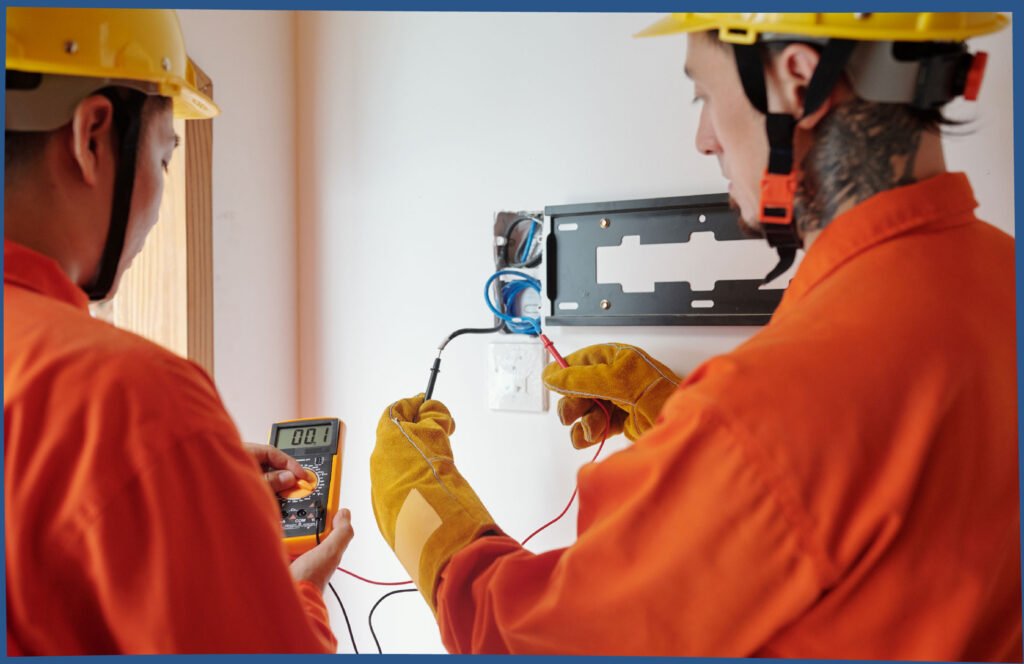



Understanding AC/DC currents, Amps, Ohms, and Volts.
Proficiency in insulation resistance, leakage current, and the safe operation of Test and Tag instruments.
Knowledge of fuses, circuit breakers, and RCDs.
These appliances rely on a combination of basic insulation and a protective earth connection. Accessible metal parts must be bonded to the earth pin.
These tools protect the user through two layers of insulation or reinforced insulation. They do not require an earth connection and are identified by the “square within a square” symbol.
Statistically, 90% of defects are found here. This involves checking for frayed cords, damaged plugs, and clear markings.
Required for Class I equipment to ensure the resistance between the plug’s earth pin and the appliance’s metal casing is low enough to trip a safety device.
Usually performed at 500V DC (or 250V DC for equipment with surge protection) to ensure the internal insulation hasn’t degraded.
Mandatory for cord sets and rewirable plugs to ensure Active, Neutral, and Earth wires are in the correct positions (Active = Brown, Neutral = Blue, Earth = Green/Yellow).
Performed while the device is powered on to measure any “leaking” current that could cause a shock.
Should be performed every 6 months for fixed units and every 3 months for portable units.